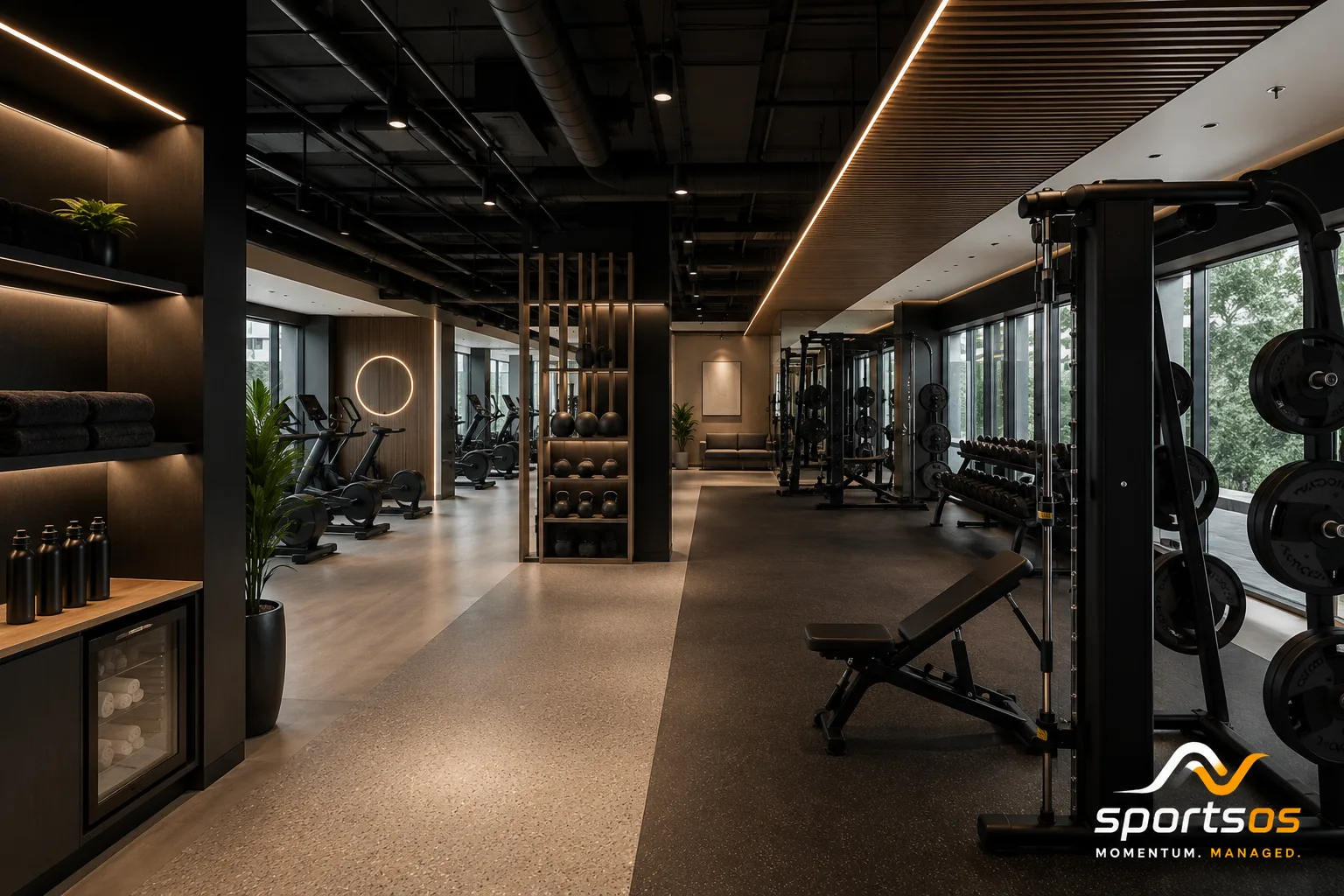
There is no single figure, and any vendor quoting one before seeing your site is guessing. A gym budget is built from five line items: space preparation, flooring, equipment, fit-out (mirrors, lighting, ventilation), and installation.
Equipment is almost always the largest single line, and flooring is the one most often under-specified. The gap between a cheap setup and a durable one usually sits in those two.
What a gym budget is actually made of
Published "gym setup cost" figures go stale within a quarter and rarely say what was included. It is more useful to understand the structure, because that is what lets you read two quotes side by side and see which one is missing something.
| Line item | What drives it | Where it goes wrong |
|---|---|---|
| Space preparation | Slab condition, levelling, any demolition or partitioning | Assumed to be zero until someone checks the floor level |
| Flooring | Area, rubber thickness by zone, rolls vs tiles | One thickness specified across the whole room |
| Equipment | Cardio, strength and functional mix, brand tier, imported vs domestic | Bought by machine count rather than by what staff will use |
| Fit-out | Mirrors, LED lighting, ventilation, acoustic treatment | Ventilation left out entirely on internal rooms |
| Installation | Access, floor level, assembly, electrical work | Quoted as a lump with no breakdown |
An office gym is a different brief from a commercial gym
Most gym setup guides in India are written for someone opening a paid-membership gym. That is a different problem. A commercial gym is optimising revenue per square foot and needs equipment density, a reception, changing rooms and a sales floor.
An office or campus gym is optimising participation. It is used in narrow windows, typically before work, at lunch and in the evening, by people who will not travel far and will stop coming if there is a queue. That pushes the brief toward fewer machine types with more duplicates at peak stations, faster circulation, and far more attention to ventilation and acoustics, because the room usually sits inside an occupied building.
Budgeting an office gym against a commercial gym template is the single most common way this goes wrong.
Space: how the room divides
Before any equipment list, the room needs to be split into zones: cardio, strength, free weights, and functional or stretch space. The split determines both the flooring spec and the equipment budget, so it comes first.
Free weights need the most floor per user and the heaviest flooring. Cardio needs the most power points and the most airflow. Functional space is the cheapest square footage in the room and the first thing cut, which is usually a mistake, because it is where group activity and any instructor-led session has to happen.
Flooring: where gyms overspend and underspend at the same time
The common error is quoting one rubber thickness for the entire floor. Cardio areas do not need what a deadlift platform needs, and a platform area laid at cardio thickness will damage the slab underneath it. Specifying by zone costs less overall than specifying one heavy thickness everywhere, and it performs better.
If the gym sits above an occupied floor, impact noise becomes a design constraint rather than an afterthought. This is covered in detail in our gym flooring guide.
Equipment: buy for the usage pattern, not the catalogue
Equipment is where most of the budget goes and where the least analysis usually happens. A campus gym serving a few hundred staff in three narrow windows has a very different requirement from one serving a thousand across a full day.
Worth deciding before anyone quotes: the cardio to strength ratio, whether functional training is in scope, whether the space supports group sessions, and what the realistic peak concurrent user count is. Those four answers change the equipment list more than brand choice does.
The items that get left out of quotes
- Ventilation and air changes, particularly for internal rooms with no external wall
- Acoustic treatment, both for the room itself and for whatever sits below it
- Electrical load and socket positions for cardio equipment
- Mirror fixing method and safety backing
- Annual maintenance, servicing and consumables after handover
- Staff induction and equipment training at handover
A quote that does not mention these is not cheaper. It is incomplete.
How to compare two quotes properly
Ask every vendor for the same five-line breakdown above, with flooring thickness stated per zone and the equipment list itemised by station rather than by count. Two quotes that look far apart usually converge once both are itemised, and the remaining gap tells you exactly what one of them left out.
sportsOS does not publish gym prices, because a number produced without a site survey is not a quote, it is a guess that someone will later have to walk back. What we will do is a site visit and a written scope before any figure is discussed.
Related gym and wellness guides
- Gym flooring, thickness by zone and impact noise control
- Gym setup and equipment installation, the full turnkey scope
- Gym setup checklist, space allocation zone by zone
- Yoga room setup, for campuses adding a studio alongside
Frequently asked questions
How much does it cost to set up a gym in India?
There is no single figure. Cost is driven by space preparation, flooring, equipment, fit-out and installation, and the range between a basic and a well-specified setup is wide. Equipment is normally the largest line item.
What is the biggest cost in a gym setup?
Equipment, in almost every case. Flooring is the second largest and the one most often under-specified, because a single thickness gets quoted across zones with very different requirements.
How is an office gym different from a commercial gym?
A commercial gym optimises revenue per square foot. An office gym optimises participation within narrow usage windows, which means fewer machine types with duplicates at peak stations, better circulation, and much more attention to ventilation and acoustics.
What gets left out of gym setup quotes most often?
Ventilation for internal rooms, acoustic treatment, electrical load and socket positions, mirror fixing and safety backing, and post-handover maintenance.
Do I need different flooring thickness in different areas?
Yes. Cardio areas and free weight or platform areas have very different impact loads. Specifying by zone costs less than laying one heavy thickness throughout and performs better.
Planning a gym for your campus?
sportsOS scopes flooring, equipment, mirrors, lighting and ventilation as one project, with a written scope agreed after a site visit and before any figure is discussed.
See Gym Setup →