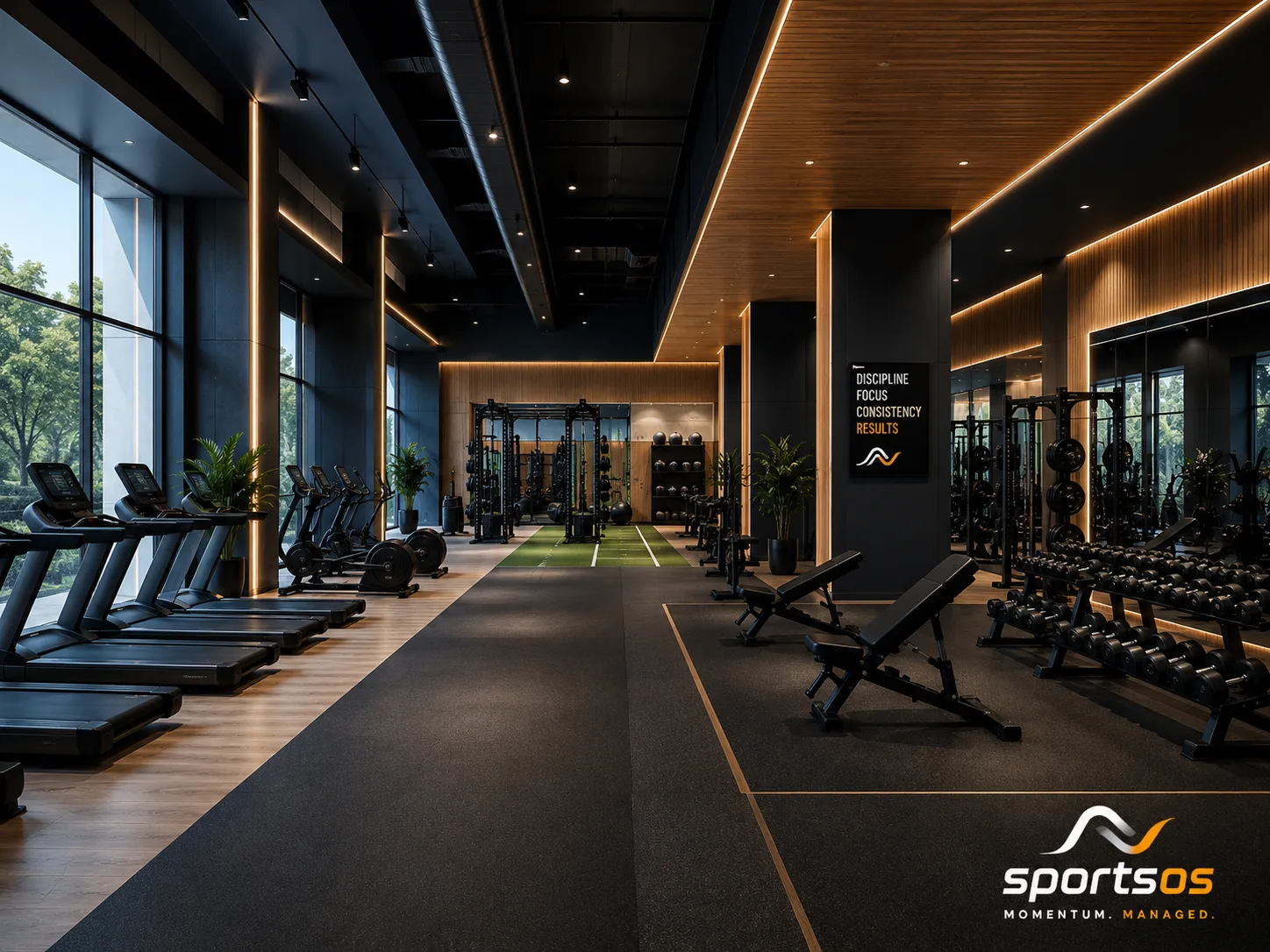
An office gym should be equipped for its busiest thirty minutes, not for its total headcount. Usage concentrates into narrow windows before work, at lunch and in the evening, and everything about the equipment list follows from that.
The practical consequence: fewer machine types with duplicates at the stations that bottleneck, rather than one of everything.
Why the commercial gym equipment list is the wrong starting point
Most published equipment lists are written for a paid-membership gym, where members arrive across a full day and variety justifies floor space. An office gym has the opposite usage curve. Nearly everyone arrives in the same three windows, so the constraint is concurrent access, not variety.
A campus gym with one of every machine will have queues at four stations and idle equipment everywhere else during its peak, and be entirely empty for most of the day. Duplicating the four contested stations serves far more people than adding four more machine types.
The list by zone
| Zone | Core equipment | Duplicate these first |
|---|---|---|
| Cardio | Treadmills, cross trainers, spin or upright bikes, rowers | Treadmills, which bottleneck in every corporate gym |
| Strength, machines | Multi-station or selectorised units for major movements | Leg press and chest press stations |
| Free weights | Dumbbell rack, benches, a rack or smith machine | Benches, which are the cheapest queue to remove |
| Functional | Mats, bands, kettlebells, medicine balls, open floor | Nothing, but protect the floor space itself |
Benches are worth calling out. They are among the least expensive items in the room and among the most contested at peak. Adding two more benches often improves the peak experience more than any single machine purchase.
Building an equipment list for your campus?
Tell us the headcount and the usage windows and we will build a list sized to your peak, with flooring specified by zone.
The cardio to strength ratio
The right split depends on who uses the gym, and the only reliable way to find out is to ask before buying rather than assume. Campuses with a younger demographic and existing sports facilities tend to skew toward strength. Campuses where the gym is the only wellness facility tend to need more cardio, because it is the lower barrier to entry for people starting out.
Getting this wrong is expensive and hard to reverse, because equipment is the largest line in the budget and resale is poor. A short internal survey before the equipment order is one of the highest-return steps in the whole project.
Functional space is not spare space
Open floor is the first thing cut when the equipment list grows, and it is usually a mistake. It is the cheapest square footage in the room and the only area that supports stretching, mobility work, bodyweight training and any instructor-led group session.
A campus running yoga, mobility or trainer-led sessions needs that floor. Filling it with two more machines converts a room that can host a programme into a room that can only host individuals.
What to skip in a corporate setting
- Highly specialised single-purpose machines, which serve few users per square foot
- Very heavy free weight loading, unless the gym sits at ground level and the demographic warrants it
- Anything requiring induction or supervision that will not be staffed
- Equipment tied to a subscription platform that facilities will not renew
- Sport-specific equipment with no facility on campus to use it alongside
What goes with the equipment
An equipment list is not a gym. Flooring specified by zone, mirrors, ventilation, power points positioned for the cardio layout, and storage for small equipment all have to be in the same scope, or they arrive as surprises after the machines are installed. Our gym flooring guide covers the surface side, and what drives gym setup cost covers how these lines fit together.
After handover
Equipment needs servicing, and consumables such as cables, belts and upholstery wear on a predictable cycle. Agree who maintains it and on what frequency at the point of purchase rather than after the first breakdown, because a gym with two machines out of service at peak feels considerably worse than the numbers suggest.
Related gym guides
- Gym setup cost in India, the five line items that drive it
- Gym flooring, thickness by zone and impact noise
- Gym setup checklist, space allocation by zone
- Gym setup and equipment installation
Frequently asked questions
What equipment does an office gym need?
Cardio machines, selectorised strength stations for the major movements, a free weight area with dumbbells and benches, and protected open floor for functional work. Equip for the busiest thirty minutes rather than total headcount.
How many treadmills does a corporate gym need?
More than one. Treadmills bottleneck in almost every corporate gym, so they are usually the first station worth duplicating rather than adding another machine type.
What is the right cardio to strength ratio?
It depends on the demographic and whether other facilities exist on campus. A short internal survey before the equipment order is worth far more than an assumption, because equipment is the largest budget line and resale is poor.
Should I include open functional floor space?
Yes. It is the cheapest square footage in the room and the only area supporting stretching, mobility, bodyweight training and instructor-led sessions. Filling it with machines removes the ability to run a programme.
What should a corporate gym avoid buying?
Highly specialised single-purpose machines, equipment requiring supervision that will not be staffed, anything tied to a subscription facilities will not renew, and sport-specific equipment with no matching facility on campus.
Equipping a gym for your campus?
sportsOS builds the equipment list against your actual usage windows, and scopes flooring, mirrors, lighting and ventilation alongside it.
See Gym Setup →