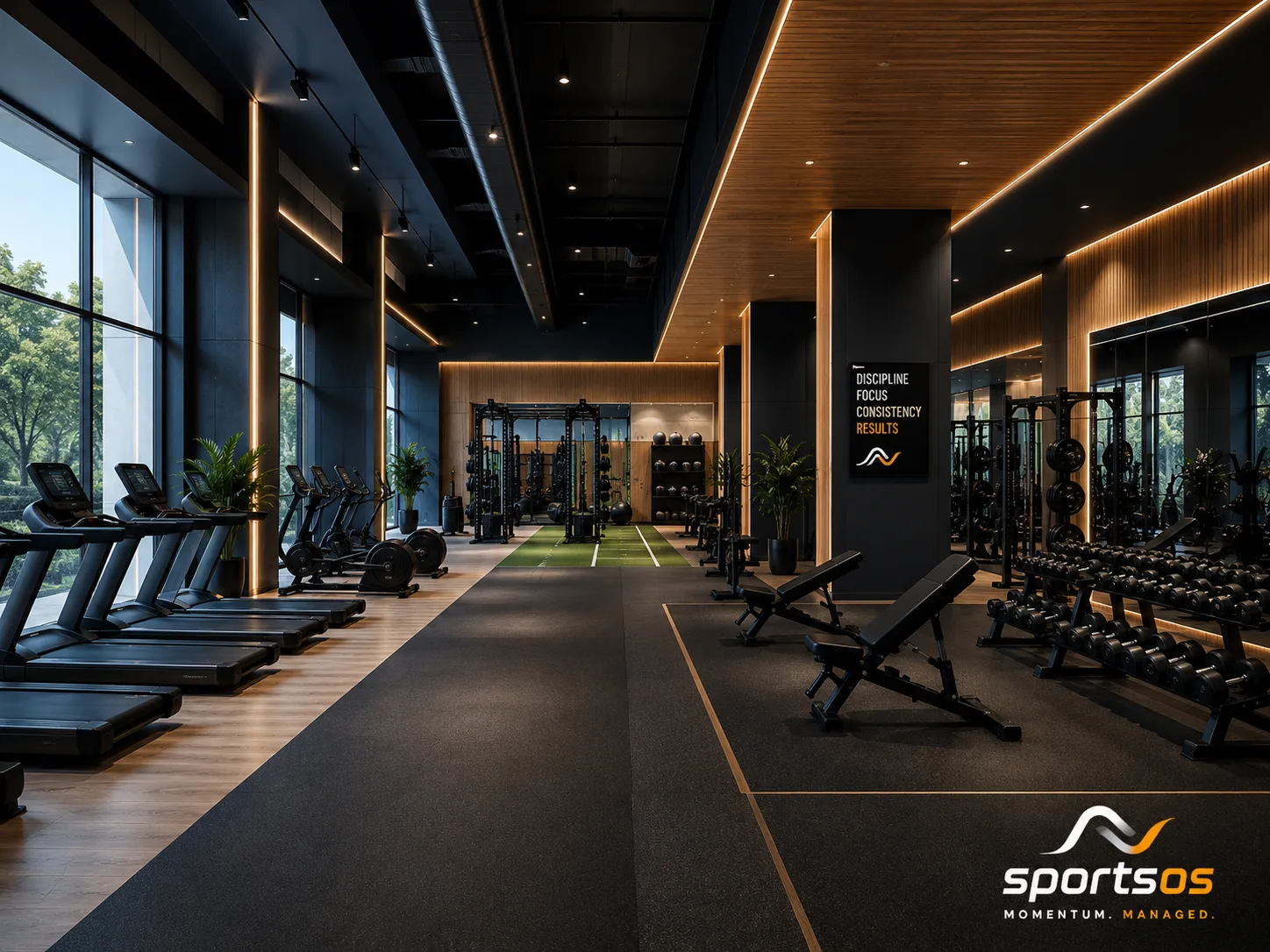
Rubber is the default surface for a gym, and thickness is the specification that matters more than brand. A single thickness across the whole room is the most common mistake in gym flooring.
Cardio areas, strength areas and free weight platforms carry very different impact loads. Specifying per zone costs less than laying one heavy thickness everywhere, and it protects the slab underneath.
Where each surface belongs
| Surface | Best for | Watch out for |
|---|---|---|
| Rubber, rolled | Main gym floor, seamless finish over large areas | Needs a level subfloor, seams show on a poor one |
| Rubber, interlocking tiles | Free weight zones, phased installs, awkward shapes | Tiles can creep apart under heavy dynamic load |
| Heavy-duty platform | Deadlift and Olympic lifting stations | Skipping it transfers shock straight to the slab |
| Artificial turf strip | Sled pushes, functional and prowler lanes | Needs a defined run length or it goes unused |
| Vinyl or wood | Studio and stretch areas, group class space | Not suitable anywhere weights are dropped |
Thickness by zone
Thickness is specified against impact, not against footfall. The heavier the load that can be dropped, the thicker the mat and the more important the layer beneath it. A cardio zone is carrying static machine weight and running gait. A free weight zone is carrying a loaded barbell released from height, which is a completely different load case.
The practical approach is to draw the zones first, then specify each one, rather than picking one number for the room. It also gives you a floor plan you can hand to a vendor, which makes quotes comparable.
The problem nobody writes about: the floor below
Most guidance on gym flooring is written for standalone gyms at ground level. A corporate gym is usually inside an occupied building, often with meeting rooms or workstations directly underneath. That changes the brief completely.
Dropped weights generate structure-borne impact noise, and impact noise travels through the slab in a way airborne noise does not. Carpet in the room below does nothing about it. The fix has to happen at the gym floor: a resilient layer under the surface rubber, isolated platforms at the lifting stations, and in some cases keeping heavy free weights off upper floors entirely.
This is worth settling at design stage. Retrofitting acoustic isolation after a gym is built means lifting the floor you just laid, and the complaint usually arrives in the first fortnight of use.
Subfloor preparation
Rubber follows whatever is underneath it. A slab with dips will show through as visible undulation and will cause rolled sheets to seam badly. Level the subfloor first, confirm it is dry, and confirm there is no existing coating that will stop the adhesive bonding. Most flooring failures trace back to the subfloor rather than the rubber.
Rolls or tiles
Rolls give a near-seamless floor and look better across a large open room, but they need a good subfloor and are harder to repair in isolation. Interlocking tiles are more forgiving, easier to phase and easier to replace in a damaged patch, but the seams are visible and can separate under heavy dynamic load if the tile grade is too light.
Many gyms end up with both: rolls across the main floor, tiles in the free weight zone where individual replacement matters most.
Maintenance
Rubber is low maintenance, not no maintenance. It needs a pH-neutral cleaner rather than a solvent, which will degrade the binder over time. Rubber also off-gasses for a period after installation, so ventilation matters in the first weeks and internal rooms need a plan for it.
What to get in writing
- Thickness specified per zone, not as a single figure for the room
- Whether an acoustic underlay is included, and where
- Subfloor levelling, and who is responsible for it
- Seam treatment and adhesive type for rolled installs
- Warranty split between the material and the installation
A material name alone, such as "rubber flooring", is not a specification.
Related gym and flooring guides
- Gym setup cost in India, the five line items that drive the budget
- PU vs acrylic vs vinyl vs wood, sports surfaces compared
- Gym setup and equipment installation
- Gym setup checklist
Frequently asked questions
What thickness should gym flooring be?
It depends on the zone. Cardio areas carry static machine weight and running gait, while free weight and platform areas carry a loaded barbell released from height. Specify per zone rather than choosing one thickness for the whole room.
What is the best flooring for a gym?
Rubber for the main floor and free weight areas, heavy-duty platforms at lifting stations, turf strips for functional lanes, and vinyl or wood for studio and stretch space.
How do I stop gym noise reaching the floor below?
Dropped weights create structure-borne impact noise that travels through the slab. It has to be addressed at the gym floor with a resilient layer under the surface rubber and isolated platforms at lifting stations. Treating the room below does not work.
Should I use rubber rolls or interlocking tiles?
Rolls give a near-seamless finish across large rooms but need a level subfloor. Tiles are easier to phase and repair but show seams and can separate under heavy load if under-specified. Many gyms use rolls on the main floor and tiles in free weight zones.
How do you clean rubber gym flooring?
With a pH-neutral cleaner. Solvent-based cleaners degrade the binder over time and shorten the life of the floor.
Specifying flooring for a gym?
sportsOS specifies gym flooring zone by zone, including acoustic isolation where the gym sits above occupied space, and confirms the subfloor condition before anything is ordered.
See Gym Setup →