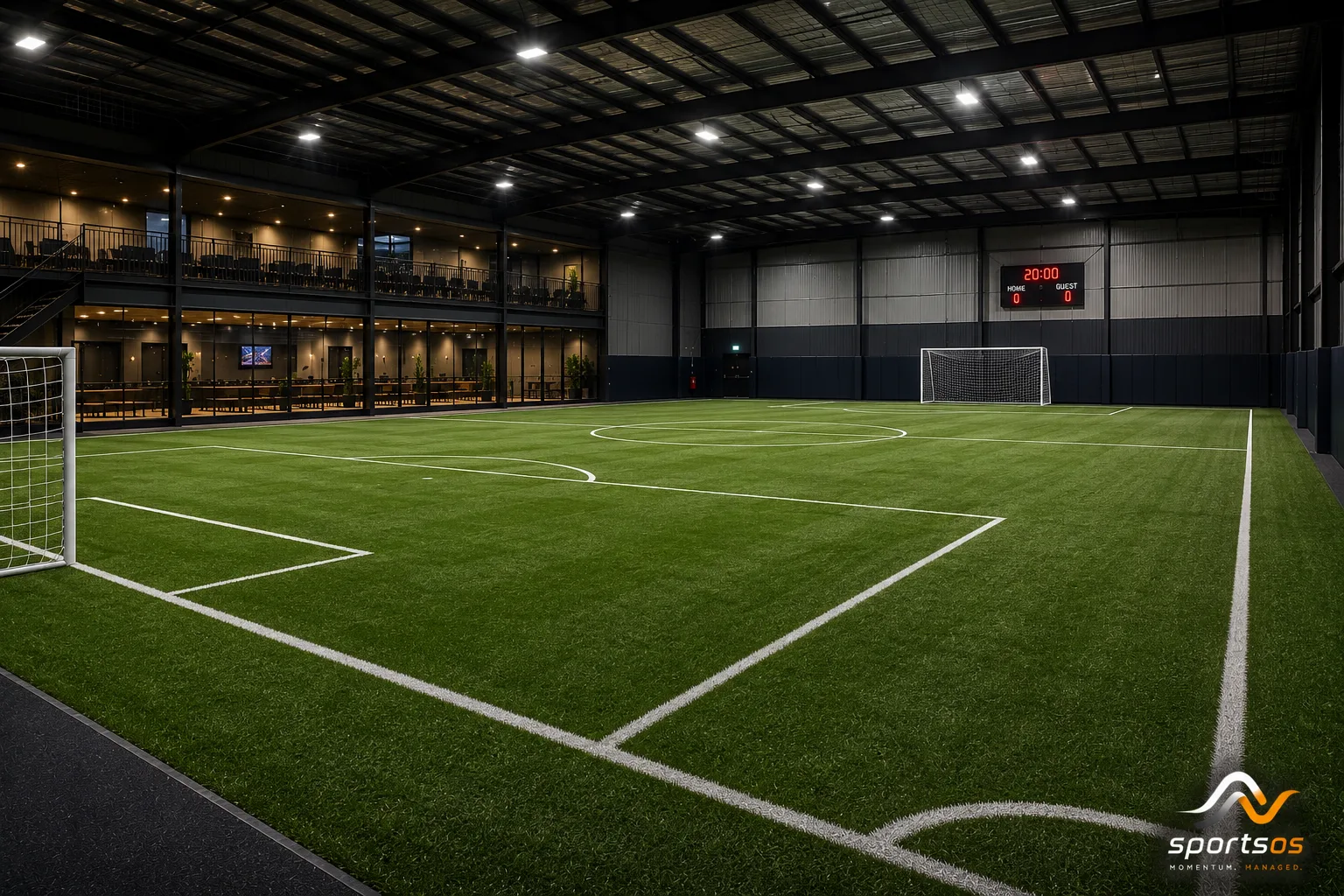
Turf quoted as a price per square foot tells you almost nothing. Two quotes at the same rate can describe surfaces with very different lifespans, because the specification sits in pile height, infill, backing and UV stability.
Around 40 mm pile is the common working figure for football use. Everything else about the quote depends on what sits under and between those fibres.
The four specifications that matter
| Specification | What it affects | What to ask for |
|---|---|---|
| Pile height | Ball roll, player comfort, drainage behaviour | The figure in mm, stated |
| Infill | Bounce, foot stability, surface recovery | Type and quantity, not just "infilled" |
| Backing | Whether the turf holds together and drains | Backing type and perforation |
| UV stability | Colour retention and fibre life in Indian sun | UV treatment confirmed in writing |
A quote naming all four can be compared against another quote. One that says "high quality football turf, 40 mm" cannot, because the fibre and backing behind that number are where the cost difference actually sits.
Pile height, and why higher is not better
Pile height is chosen against use, not maximised. Too short and the surface is hard underfoot with too much ball roll. Too long and the ball sits down in the pile, the surface holds water longer, and it becomes harder to keep the fibres upright over time.
The 40 mm figure works for most football and 5-a-side use. Full-size pitches and higher levels of play often go longer. Multi-use surfaces that also see cricket or general recreation may go shorter for a more predictable roll.
Comparing turf quotes?
Send us what you have been quoted. We will tell you what is missing from the specification before you commit to anything.
Infill is where quotes quietly diverge
Infill sits between the fibres and does most of the work in how the surface plays. It stabilises the fibres so they stand up, provides the shock absorption underfoot, and affects how the ball behaves off the surface.
Infill quantity is as important as type. Under-infilled turf plays hard, the fibres lie down early, and the surface ages far faster than the fibre specification suggests it should. It is also invisible on delivery, which is why it is worth having the quantity stated in the quote rather than assumed.
The base is not a detail
Artificial turf follows its base exactly. Every dip, every soft spot and every drainage failure underneath will show up on the surface, usually within the first monsoon.
For outdoor installations drainage design matters as much as the turf itself. Water has to get through the backing and away, which means both a permeable build-up and somewhere for the water to go. Turf laid over a base that holds water degrades quickly and stays unplayable far longer after rain than clients expect.
A shockpad between base and turf adds cost and improves both underfoot feel and fibre life. Whether it is worth it depends on usage intensity, and it should be a deliberate decision rather than something omitted silently to bring a quote down.
What drives the cost
- Area, which dominates everything else
- Fibre specification, pile height and UV treatment
- Infill type and quantity
- Base preparation, levelling and drainage
- Shockpad, if included
- Perimeter fixing, edging and line marking
- Site access, which affects installation cost more than people expect
Maintenance, which decides actual lifespan
Turf lifespan figures assume maintenance that most facilities do not do. Brushing keeps fibres upright and redistributes infill. Without it, high-traffic areas flatten, infill migrates to the edges, and the surface ages unevenly. Goalmouths and centre areas go first.
Ask what maintenance the quoted lifespan assumes, and whether the supplier offers it. A turf warranty that depends on maintenance nobody is doing is not worth much.
Before you sign
Get pile height, fibre type, UV treatment, infill type and quantity, backing, base build-up and whether a shockpad is included, all in writing. sportsOS quotes against that list rather than a rate per square foot, which is what lets you compare us against anyone else honestly.
Related turf and pitch guides
- 5-a-side pitch size, common dimensions and formats
- Futsal court dimensions, official FIFA size
- Box cricket setup, another enclosed turf build
- Football and futsal court installation
Frequently asked questions
What pile height should football turf be?
Around 40 mm is the common working figure for football and 5-a-side use. Higher is not automatically better, since long pile holds water and lets the ball sit down in the surface.
What does infill do in artificial turf?
It stabilises the fibres so they stand upright, provides shock absorption underfoot, and affects ball behaviour. Quantity matters as much as type, and under-infilled turf ages far faster than its fibre specification suggests.
Why does the base under turf matter so much?
Turf follows its base exactly. Dips, soft spots and drainage failures all show through on the surface, usually within the first monsoon. Outdoor drainage design matters as much as the turf itself.
Is a shockpad worth it?
It adds cost and improves underfoot feel and fibre life. Whether it is justified depends on usage intensity, but it should be a deliberate decision rather than something quietly omitted to lower a quote.
How long does football turf last?
Published lifespans assume maintenance most facilities do not do. Without regular brushing, fibres flatten in high-traffic areas and infill migrates to the edges, so goalmouths and centre areas wear first.
Specifying turf for a pitch or box?
sportsOS quotes turf against a full written specification, pile, infill, backing, base and drainage, rather than a rate per square foot.
See Football & Futsal Courts →