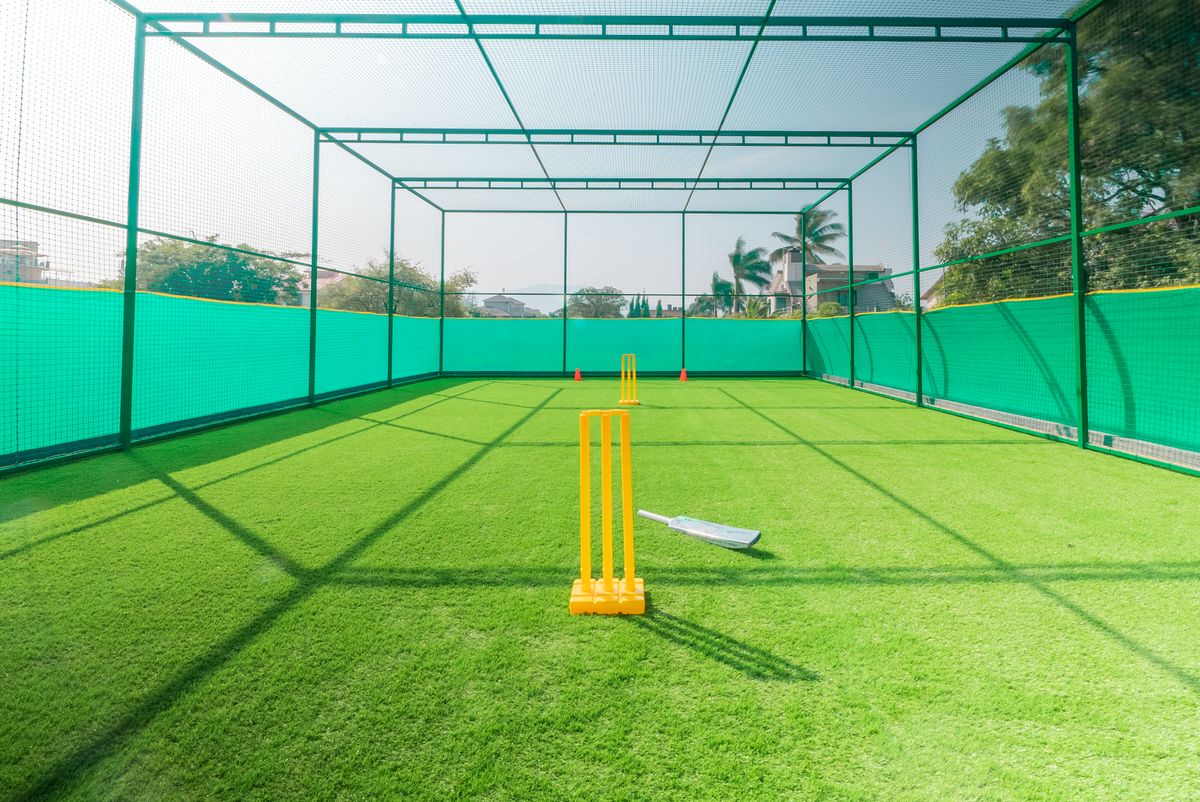
A cricket pitch is 22 yards, or 20.12 m, from wicket to wicket. A practice bay built to that length is unusable, because the bowler has nowhere to run up from.
Plan a practice lane as pitch length plus run-up plus back space. That is the number that decides whether a site works, and it is routinely underestimated.
The numbers that are fixed
| Element | Metric | Imperial |
|---|---|---|
| Pitch, wicket to wicket | 20.12 m | 22 yards (66 ft) |
| Pitch width | 3.05 m | 10 ft |
| Stump height above ground | 71.1 cm | 28 in |
| Stumps, overall width | 22.86 cm | 9 in |
These come from the Laws of Cricket and do not change. Everything else about a practice bay is a design decision driven by the space available and the standard of play.
What a practice bay actually needs
A bay has three zones along its length: the run-up behind the bowler's stumps, the pitch itself, and the space behind the batter for the ball to travel into the net.
The run-up is what gets cut when a site is short, and it is the zone that determines whether pace bowling is possible at all. A spin-only facility can work in far less length. A bay intended for pace bowling needs a run-up long enough for a full approach, and shortening it does not produce a slightly worse net, it produces a net that pace bowlers cannot use.
Back space behind the batting stumps matters too. Too little and the ball rebounds off the net straight back at the batter, which is both unpleasant and unsafe.
Not sure if your site is long enough?
Send us the available length and we will tell you what standard of practice it supports, and whether it suits pace, spin or both.
Bay width and height
Width is set by safety and comfort rather than by any regulation. The bay must comfortably contain a batter playing a full horizontal shot without the bat or the follow-through reaching the netting, and it must give the bowler a straight approach without brushing the side net.
Height needs to contain a genuine lofted shot and a bouncer that carries. Nets that are too low let balls escape over the top, which defeats the purpose of the enclosure and creates a hazard in whatever sits beyond it. Height also has to account for any sag in the netting once it is tensioned and has been in service for a season.
Multiple bays side by side
Where more than one lane is built, the dividing nets between bays need to be full height and properly tensioned, or a ball from one lane will find its way into the next. Dividing nets also take more wear than the outer ones, because they are struck from both sides.
Plan access at the batting end for each bay independently. A run of bays where players must walk through one lane to reach another means practice stops every time someone moves.
Indoor bays and ceiling height
Indoors, the ceiling replaces the top net and becomes the binding constraint. The height has to allow a natural bowling action with a full arm rotation at delivery, plus the arc of a ball that carries. Measure to the lowest obstruction, including light fittings and ducting, and protect any fitting that sits within range.
A low indoor ceiling changes what the facility is for. It can still be a good throwdown and spin practice space. It will not be a pace bowling facility, and it is better to establish that at design stage than after the nets are hung.
Planning checklist
- Total available length, measured end to end, before deciding bay count
- Whether the facility is for pace, spin or both, since that sets the run-up
- Back space behind the batting stumps for safe rebound
- Clear height, measured to the lowest obstruction indoors
- Dividing net specification where multiple bays adjoin
- Independent access to each bay at the batting end
Related cricket guides
- Cricket practice net cost, the specifications that move the budget
- Cricket nets setup and installation
- Cricket nets setup cost and timeline
- Multi-sport campus space planning
Frequently asked questions
What are the dimensions of a cricket practice net?
The pitch inside it is 20.12 m (22 yards) wicket to wicket and 3.05 m wide, but a usable bay needs that plus a run-up behind the bowler and back space behind the batter.
How long is a cricket pitch?
22 yards, or 20.12 m, from wicket to wicket. The pitch is 3.05 m (10 ft) wide.
How much run-up does a practice net need?
Enough for a full pace approach if pace bowling is intended. Shortening the run-up does not produce a slightly worse net, it produces one that pace bowlers cannot use. Spin-only facilities need far less.
How tall should cricket nets be?
Tall enough to contain a lofted shot and a bouncer that carries, with allowance for netting sag after a season in service. Nets that are too low let balls escape and create a hazard beyond them.
Can cricket nets go indoors?
Yes, but ceiling height becomes the binding constraint and must allow a natural bowling action plus ball carry. Measure to the lowest fitting. A low ceiling makes a good spin and throwdown facility but not a pace one.
Sizing a cricket net facility?
sportsOS measures the available length against the standard of practice you want, then scopes bays, netting, frame and surface as one project.
See Cricket Nets Setup →