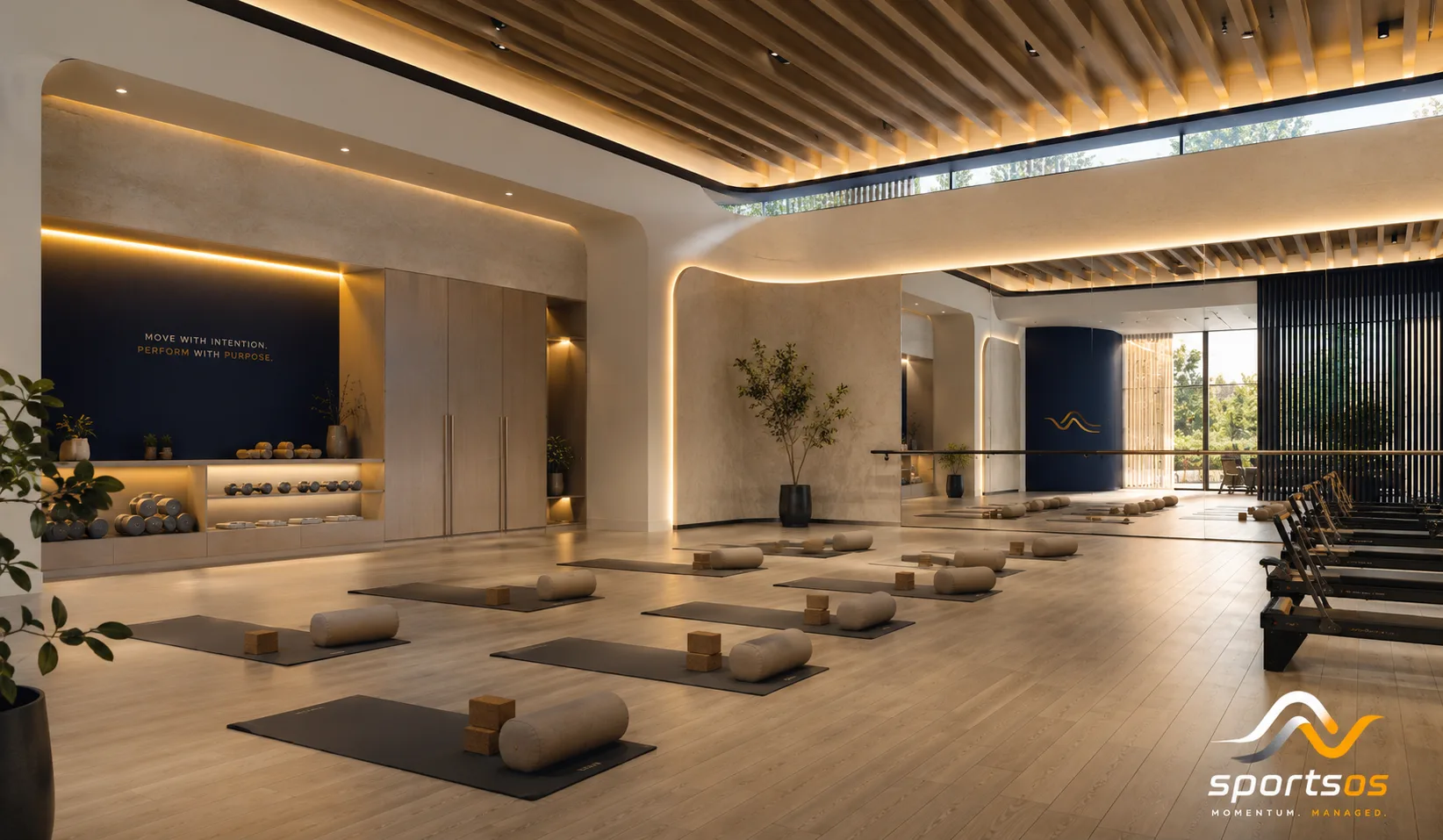
sportsOS set up an in-house spa for a multinational technology company's campus. Not a wellness room repurposed as one, an actual treatment space designed and fitted for the purpose.
Alongside it we are building out spa and sports vouchers, which extend the same programme to staff the physical facility cannot reach.
Why a campus spa is a different build from a wellness room
A yoga or wellness room is a flexible space. A treatment space is not. It has fixed requirements that have to be designed in rather than added later, and getting them wrong produces a room that looks right and is never fully used.
| Requirement | Why it is fixed |
|---|---|
| Acoustic separation | Treatments need genuine privacy, not a partition |
| Independent temperature control | A treatment room cannot share an office HVAC zone |
| Lighting control | Must dim properly, and avoid fittings directly overhead |
| Discreet access | Staff will not use a room with a visible queue outside it |
| Storage and linen | Needs a home in the room, or turnaround between slots slips |
| Ventilation | Product and oil use makes air handling a real consideration |
The access point is the one most often missed. A treatment room placed off a main corridor gets booked far less than one with discreet approach, regardless of how good the room itself is.
Considering a wellness or treatment space?
The constraints are fixed and cheapest to solve at design stage. Book a site visit and we will tell you what your space can support.
Where vouchers fit
A physical facility, however good, serves the people who are on that campus on that day. It does not serve staff at smaller sites, staff who are remote, or staff whose schedules never line up with the available slots.
Spa and sports vouchers close that gap. They extend the same wellness budget to people the building cannot reach, and they let a programme cover a distributed workforce without setting up a facility at every location. For an organisation with one large campus and several smaller offices, that is usually the difference between a wellness benefit that reads as universal and one that reads as a perk for headquarters.
What makes a campus wellness facility get used
- Booking that takes seconds, not an email to an administrator
- Slots that match how people actually work, including early and late
- Genuine privacy, which is a design property rather than a policy
- Visible availability, so staff know a slot exists before they ask
- A programme around the room, rather than a room on its own
That last point decides most of it. A well-built room with no scheduled programme around it settles into low, occasional use. The facility is the enabler, not the programme.
Booking and scheduling
Campus wellness facilities run on the same sportsOS platform we use for sports facility booking, so slots, availability and utilisation sit in one place. That gives a facilities team something most wellness programmes never produce: actual utilisation data, which is what the next budget conversation needs.
Without it, a wellness facility is defended on the basis that it seems popular. With it, the case is made on how many slots ran and how they were distributed.
Related wellness resources
- Managed wellness programs, instructor-led and scheduled
- Yoga room setup, space, flooring and acoustics
- Making wellness programs stick
- Corporate wellness hampers
Frequently asked questions
Can sportsOS set up an in-house corporate spa?
Yes. We have designed and fitted an in-house treatment space for a multinational technology company's campus, covering acoustic separation, independent climate control, lighting, ventilation and discreet access.
What makes a treatment room different from a wellness room?
A wellness room is flexible. A treatment room has fixed requirements, principally acoustic privacy, independent temperature control, proper lighting control and discreet access, which must be designed in rather than added later.
What are spa and sports vouchers?
Vouchers extend a wellness budget to staff a physical facility cannot reach, such as those at smaller sites or working remotely, without building a facility at every location.
How is usage of a wellness facility tracked?
Booking and scheduling run on the sportsOS platform, which produces actual utilisation data rather than an impression of popularity.
What stops a campus wellness facility being used?
Usually access and programming. A room off a main corridor with a visible queue gets avoided, and a well-built room with no scheduled programme around it settles into occasional use.
Building a wellness facility on campus?
sportsOS designs and fits wellness and treatment spaces, and runs the programme and booking around them so the room gets used.
See Wellness Programs →