Practice bays that serious players actually want to use.
A well-built cricket net is the difference between a facility that's used and one that sits empty. sportsOS designs, supplies, and installs indoor and outdoor net bays with proper pitch matting, structurally sound frames, and all the finishing that makes a bay feel professional.
Frame, net, and matting installed in a single visit for standard bays
Full run-up and delivery length, indoor or outdoor
Comfortable width for batsman, coach, and fielding drill space
Indoor or outdoor, built for how your campus plays
Both setups use the same regulation bay dimensions. The difference is in the frame system, netting grade, and pitch surface chosen for the environment.
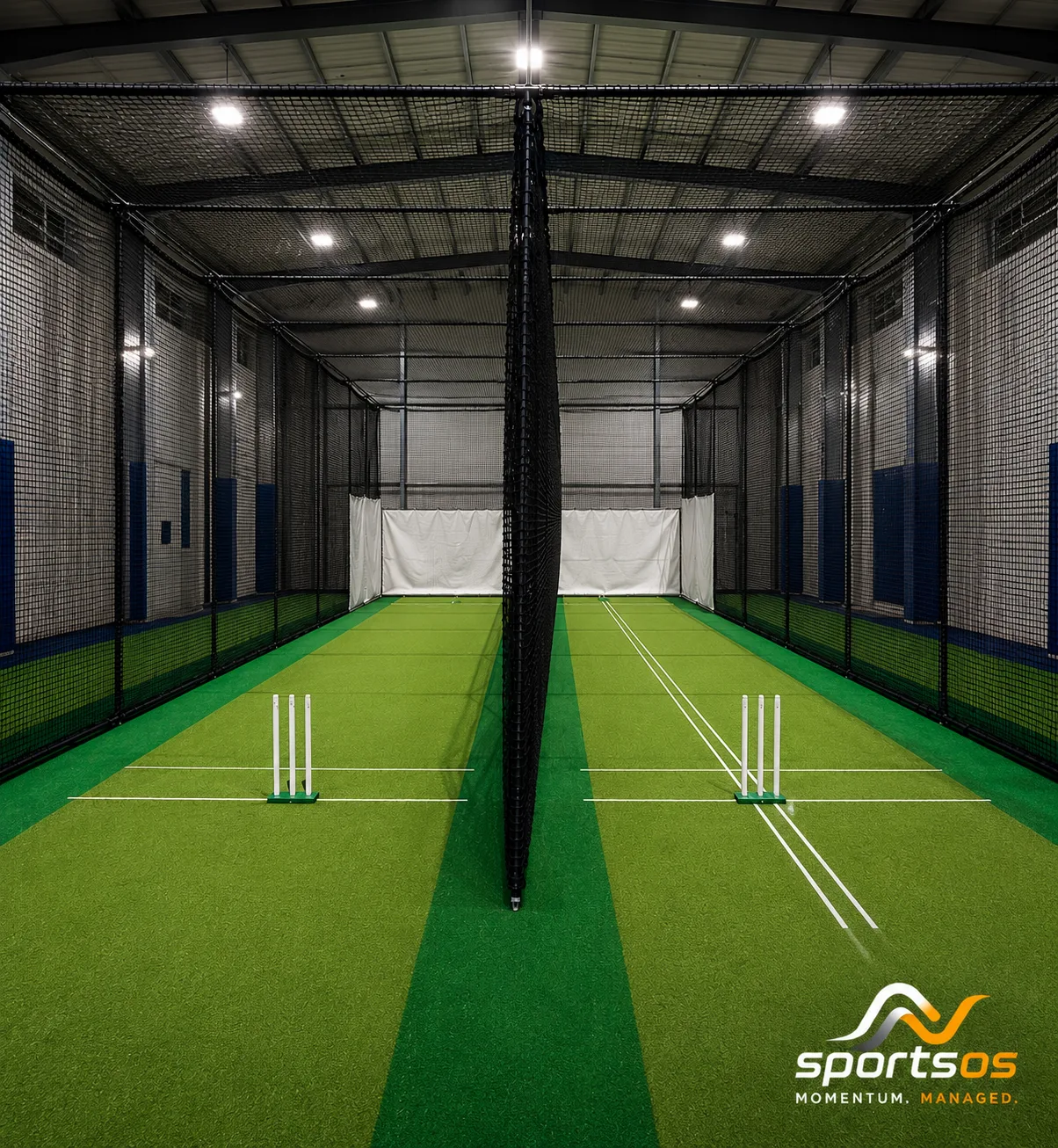
Indoor Cricket Net
Nylon knotless netting on a powder-coated mild steel frame. The enclosed environment means no wind load, so the structure is lighter and faster to put up. Synthetic carpet pitch gives consistent bounce year-round without any maintenance.
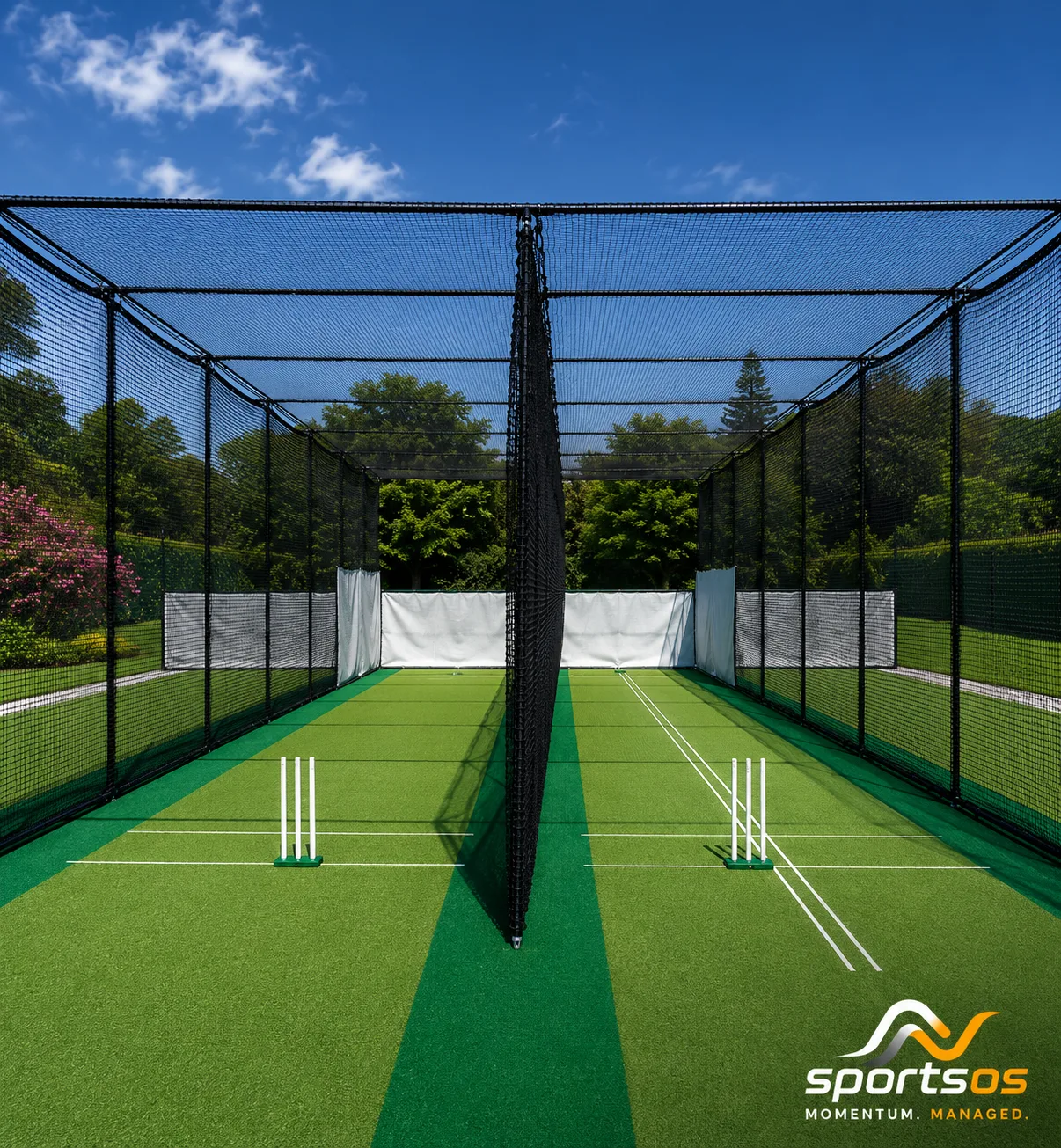
Outdoor Cricket Net
HDPE UV-stabilised netting on a galvanised steel frame built to handle wind, rain, and direct sun without corroding or sagging. Pitch options include coconut mat on concrete or a full synthetic turf strip, depending on the surface available.
One order, one team, one invoice
Frame, net, pitch, and accessories in a single GST-compliant quote. No separate vendors, no coordination overhead.
Frame Structure
MS or galvanised steel uprights and overhead rails, drilled and fixed to floor or ground anchors. Engineered for the span length without mid-span sag.
Netting System
Side nets, top net, and back-stop net tensioned and clipped to the frame. Knotless nylon (indoor) or knotted HDPE (outdoor) depending on setup type.
Pitch Surface
22-yard synthetic carpet, coconut coir mat, or full synthetic turf strip laid and fixed to the playing surface. Consistent pace and bounce, low maintenance.
LED Bay Lighting
Overhead LED strips positioned to eliminate shadows at the batting and bowling end. Even illumination across the full bay length, no flicker.
Bowling Machine Mount
Floor anchor point or wall bracket pre-installed so a bowling machine can be secured safely. Compatible with standard machine footprint dimensions.
Handover & Care Guide
Walkthrough on net tensioning, anchor inspection, and pitch care with facility staff. Printed maintenance sheet included at handover.
Built to specification
All bays follow BCCI-recommended practice net dimensions. Structural materials and surface spec are matched to the environment, indoor or outdoor.
| Parameter | Standard | What it means in practice |
|---|---|---|
| Bay length | 30 m (22 yd pitch) | Full regulation pitch with run-up space at both ends |
| Bay width | 3.5 m per lane | Room for batsman, coach, and a fielding position |
| Net height | 4–4.5 m | Clears a full drive without touching the roof netting |
| Pitch length | 20.12 m (22 yards) | BCCI standard, crease to crease |
| Mesh size (indoor) | 40 mm knotless | Stops the ball cleanly, no rebound distortion |
| Mesh size (outdoor) | 45 mm knotted HDPE | Stronger under wind and UV exposure |
| Frame diameter | 48 mm OD pipe | Standard structural spec for single-span bay |
| Synthetic pitch pace | Medium-fast surface | Consistent pace, no variable bounce from surface wear |
| Coir mat thickness | 12 mm on concrete | Absorbs impact, gives seam movement on hard surface |
| Lighting (optional) | 300+ lux at pitch level | Even illumination, no shadows at either crease |
Bay Layout (Top View)
From one practice lane to a full academy setup
Cricket net setups scale easily. Start with a single bay and add lanes as demand grows, the frame system is designed for extension.
Solo Practice Lane
One fully enclosed bay with pitch and back-stop netting. Right for campuses with limited space that want a functional practice facility without a large footprint.
- Minimum floor area: 30 m × 4 m
- Single lane, one bowler/batter at a time
- Indoor or outdoor, same dimensions
- Bowling machine mount included
Multi-Lane Facility
Two to four lanes side by side with shared frame uprights between bays. Allows parallel sessions, coaching, and internal league play. Most common for GCC campuses.
- Shared uprights between lanes save cost
- Common roof net across all bays
- Individual pitch mats per lane
- Optional divider curtain between lanes
Full Training Centre
Five or more lanes with LED lighting, bowling machine points in each bay, video analysis mounting, and seating for coaches. For campuses serious about their cricket culture.
- 300+ lux LED lighting per lane
- Bowling machine anchor in every bay
- Spectator and coaching area
- Video mount points on request
Site visit to first session in 4 steps
Site Assessment
We visit your facility to measure the available space, check the ceiling height (indoor) or ground conditions (outdoor), and confirm anchor feasibility.
Design & Quote
Based on the assessment we propose the number of bays, frame spec, net grade, and pitch surface. Full scope with material breakdown in the quote.
Installation
Frame anchored, net stretched and tensioned, pitch surface laid and fixed. Typical single-bay installation completes in 3–5 days depending on surface prep.
Handover
Walkthrough with facility staff covering net inspection, tension adjustment, and pitch care. Maintenance sheet and anchor torque specs left on-site.
Common questions
A clear headroom of 4 metres is the practical minimum for a functional indoor cricket net. At this height, a full straight drive and a standard high defensive shot (including a top edge that balloons upward), clear the overhead net without interference. This ceiling height will, however, limit certain lofted shots, particularly in batting sessions focused on hitting against spin. A ceiling of 4.5 metres is significantly more comfortable and is the specification sportsOS uses for all new-build indoor facilities, it accommodates most aggressive attacking shots without restriction. Ceilings of 5 metres and above are ideal for full-range batting. For buildings with ceiling heights of 3.5 metres or less, we can assess whether a partial or reduced-height setup would still provide useful batting and fielding drill value. We will not recommend a setup that compromises safety, if the ceiling is genuinely too low for safe play, we will say so clearly and suggest alternative sports facility options that work within the available space.
Yes, sportsOS can specify a retractable net system where the overhead and side panels roll up and clip to the frame, leaving the structural uprights in place while clearing the full floor area for other uses. This configuration is particularly common in corporate multipurpose halls where the net bays need to double as event space for town halls, exhibitions, or fitness classes during the working week. The frame remains permanently anchored, with nets stored in rolled position against the overhead rail when not in use. Rolling and deploying the net system takes five to eight minutes per bay with two people, which is a practical cycle time for daily-use facilities. The retractable system does add cost (typically 25–35% more than a fixed net installation of the same size), but for facilities that genuinely need dual-purpose use of the space, it is a worthwhile investment that significantly increases the overall utilisation rate of the area and avoids the need to build a dedicated room.
Both surfaces deliver a usable batting experience, but they have meaningfully different playing characteristics and maintenance requirements. Synthetic carpet gives consistent pace and bounce with very little seam movement, the surface is predictable, plays similarly in all weather conditions even for covered facilities with airflow, and requires almost no maintenance beyond periodic sweeping. It is the right choice for a corporate facility where the primary goal is employee engagement and accessible play. Coconut coir mat on a concrete base produces more seam movement and a variable pace closer to natural grass, experienced players typically prefer it for serious practice as it better replicates outdoor conditions and develops more technically complete batting technique. The trade-off is higher maintenance: coir mats degrade faster than synthetic carpet, need replacement every two to three years, and require more careful moisture management. For most corporate campuses, synthetic carpet is the practical choice. For campuses with dedicated cricketers targeting genuine skill development, coir mat is worth the additional maintenance commitment.
Net lifespan varies significantly between indoor and outdoor installations and depends on the quality of netting specified. Indoor nylon knotless nets in a protected environment (no direct UV, no rain), typically last five to seven years under regular daily use, retaining their structural integrity and safe ball containment throughout. Outdoor HDPE (high-density polyethylene) nets with the correct UV stabilisation rating are designed for seven to ten years of open-air service. The structural frame lasts considerably longer than the netting, galvanised steel frames installed by sportsOS have a design life of 15 or more years, and most installations run their full life without structural replacement. The main wear factor for outdoor frames is the anchor grouting at ground level, which we inspect annually. Net replacement is a straightforward service that does not require frame disassembly, sportsOS can re-net an existing bay in a single day. Net replacement is available as a standalone service or built into your annual maintenance contract.
Yes, sportsOS can source and supply bowling machines as part of the same project order, ensuring the machine is correctly matched to the bay setup and the anchor point is pre-installed during net installation itself rather than as a separate retrofit. We carry a range of machine specifications from basic fixed-speed units (suitable for consistent pace practice in entry-level facilities), through to fully programmable multi-direction machines that can simulate swing, variable pace, and off-stump deliveries for skilled batsmen. For a campus focused on recreational use and team-building sessions, a mid-range fixed or two-speed machine is more than adequate and significantly less expensive. For campuses with competitive cricket aspirations, a programmable machine with remote control is the right investment. The machine is delivered, positioned, and function-tested on the same visit as the net handover. We also advise on ball type, foam practice balls are recommended for corporate facilities to manage risk and reduce net wear over time.
Ready to build your cricket net facility?
Tell us your available space and how many bays you need. We'll visit, assess, and have a full proposal back within 48 hours.