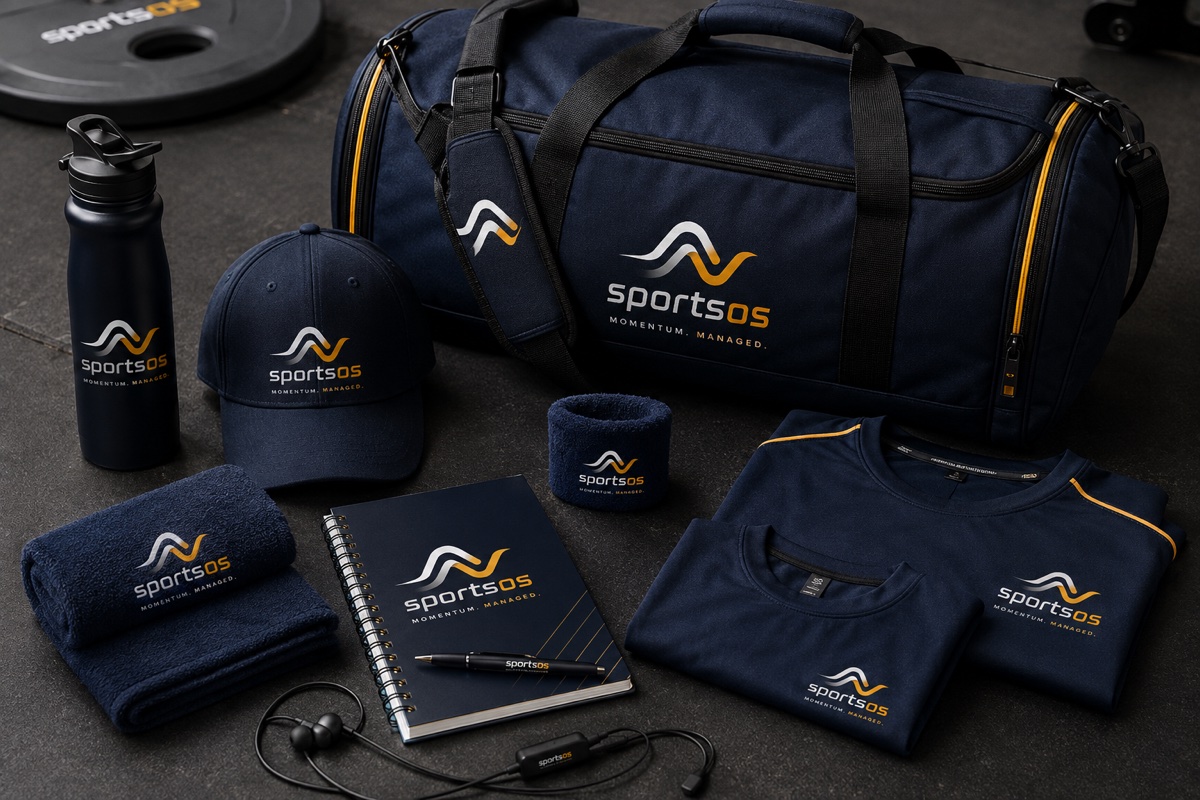
A sports hamper is built around one anchor item that carries the value, usually a bag or apparel, with everything else supporting it. Kits assembled as an even spread of small items feel cheaper than they cost.
The most common formats are the joining kit for new starters, the tournament or sports day kit, and the festive kit. Each has a different anchor and a different constraint.
The three formats, and how they differ
| Format | Anchor item | Main constraint |
|---|---|---|
| Joining kit | Bag or branded apparel | Runs continuously, so stock must be held not ordered per person |
| Sports day or tournament kit | Team apparel, usually numbered or named | Fixed event date and sizes needed in advance |
| Festive or milestone kit | Higher-value single piece | Compressed lead time against a fixed festival date |
Joining kits are the format most often got wrong, because they are treated as a one-time order rather than a standing stock requirement. New starters do not arrive in neat batches. A kit programme needs buffer stock across sizes, a reorder trigger, and someone owning it, or new joiners receive their kit in month three and the gesture is lost.
Sizing is the whole problem
Apparel is the anchor in most sports hampers and sizing is where these programmes fail. Ordering a single size, or splitting an order evenly across sizes, both produce waste at one end and shortage at the other.
The workable approaches are collecting sizes at offer-acceptance for joining kits, running a short internal form for event kits, or choosing an anchor item that does not need sizing at all, such as a duffel or backpack, with apparel as a secondary piece.
Need joining kits or event hampers?
Give us headcount, occasion and budget band. You get a contents proposal and a per-item quote with GST shown on each line.
What belongs in a sports hamper
- A bag, which is the highest-retention item in almost every kit we have assembled
- Apparel, branded subtly enough to be worn outside work
- A bottle, chosen for a size people will actually carry
- A sport-specific item tied to a facility that exists on campus
- Accessories such as a cap, towel or wristband to round out the box
The last point about sport-specific items matters. Including shuttles in a kit for a campus with no badminton court is a small thing that signals nobody thought about it.
Branding that survives contact with reality
Embroidery outlasts print on apparel and looks better after a wash, at a higher unit cost and a longer lead time. Print is the right call for high volumes and short deadlines. Bags take branding well and are worth spending the embroidery budget on, because they are the item most likely to be carried in public.
Settle minimum order quantities per branded item before finalising contents. MOQs, not preferences, usually decide what is feasible in a given batch size.
Distribution across multiple cities
Most enterprise kit programmes span sites. The decisions that matter are whether kits are assembled centrally and shipped, or assembled per city, and whether they go to offices or homes. Central assembly gives consistency and simpler quality control. Per-city assembly cuts transit time and damage. Home delivery reaches remote staff but adds address collection, which is the longest single step in the timeline.
The GST question, and why per-item matters
A sports hamper mixes apparel, equipment and accessories, and these do not all attract the same GST rate. A supplier quoting one blended figure is hiding which line is carrying the cost, and that quote cannot be compared against another one properly.
sportsOS quotes per item with the applicable rate shown against each line, which is both easier to approve internally and easier to audit later.
Getting the timeline right
Work backwards from the date the kits must be in hand. The critical path is the slowest branded item, plus assembly, plus transit to the furthest site, plus a buffer for replacements. For a festive kit against a fixed date, that buffer is not optional.
Related gifting guides
- Corporate wellness hampers, contents and briefing by occasion
- Sports hampers and corporate gifting, the full service
- Sports gifting providers in India
- Planning a corporate tournament, where event kits fit
Frequently asked questions
What goes in a corporate sports hamper?
A bag as the anchor item, branded apparel, a bottle sized to actually be carried, a sport-specific item tied to a facility on campus, and accessories such as a cap or towel.
What is a joining kit?
A hamper given to new starters, usually anchored on a bag or branded apparel. It runs continuously rather than as a single batch, so it needs buffer stock across sizes and a reorder trigger.
How do you handle apparel sizing for kits?
Collect sizes at offer-acceptance for joining kits, or run a short internal form for event kits. Alternatively choose an anchor item that needs no sizing, such as a duffel or backpack.
Is embroidery or print better for branded apparel?
Embroidery lasts longer and looks better after washing, at a higher unit cost and longer lead time. Print suits high volumes and short deadlines.
Why does per-item GST matter on a hamper quote?
A hamper mixes apparel, equipment and accessories, which do not share one GST rate. A blended figure hides which line carries the cost and makes quotes impossible to compare.
Planning joining kits or a sports hamper batch?
sportsOS sources, brands, assembles and distributes sports hampers across sites, quoted per item with GST on every line.
See Hampers & Gifting →