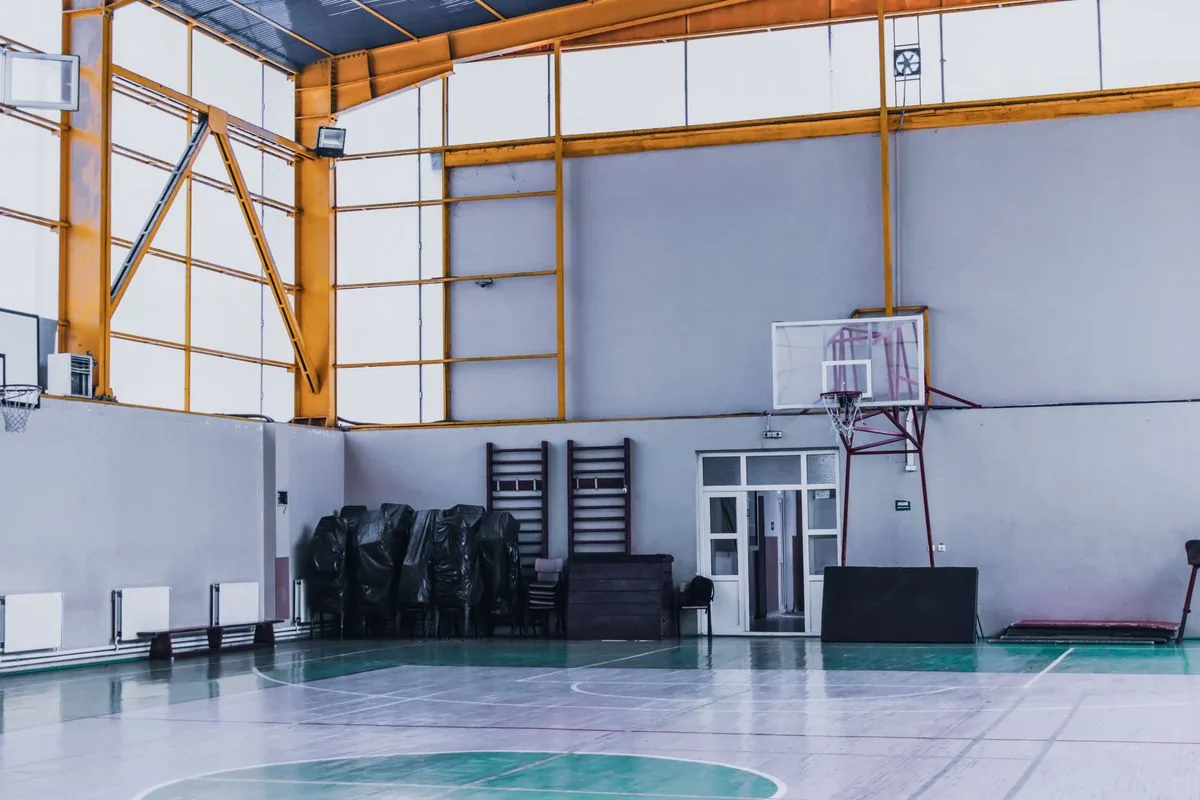
Basketball court budgets swing wider than almost any other sport on a corporate campus, and flooring choice is usually what moves the number most. This guide sets out what drives the cost, so you can see where your project will land before asking for a quote.
Full court vs half court vs FIBA 3x3
A full FIBA court (28m by 15m) suits large campuses with dedicated sports zones. Most corporate installations use a half-court layout (14m by 15m), which supports shooting drills and 2-on-2 games at roughly 50 to 60% of full-court cost. A FIBA 3x3 court needs only 15m by 11m, roughly two standard parking bays, and is the most space-efficient option for compact campuses.
Cost by flooring type
- Outdoor acrylic surface, the most economical of the three. Installed in 7 to 10 days, low maintenance, ideal for campuses with outdoor space.
- Indoor sports vinyl, the mid-range option. Shock-absorbing, suitable for climate-controlled indoor facilities.
- Maple hardwood, the premium option with certified shock absorption and the highest ball-rebound consistency, typically reserved for flagship campus sports facilities.
Lighting and hardware costs
Lighting is a separate line: LED high-bay fittings rated at a minimum of 500 lux with 0.6 uniformity for recreational play. Backboards, hoops and pole systems are another, and the cost depends on whether they are fixed wall-mounted or ceiling-hung units or freestanding.
Annual maintenance
A basketball court AMC is priced on the court and the tier you choose, and covers surface cleaning, backboard and rim checks, line marking touch-ups and lighting maintenance. Outdoor acrylic surfaces need more frequent UV-protective resealing (every 18 to 24 months) than indoor installations.
For surfaces, hoops and timelines, see our basketball court construction page.
Budgeting a basketball court?
sportsOS scopes court size, flooring and hardware together so the number in your budget matches what actually gets built.
See Turnkey Projects →